Reference navigation

Articles for any country (all categories)

Showing posts 1 to 8 of 175 | Older posts

A hidden secret in Brazil


Mountain scenery at Reserva do IbitipocaMountain scenery at Reserva do Ibitipoca

After a 4 hour journey by road from Rio de Janeiro I arrived to Reserva do Ibitipoca, a special new find for Last Frontiers. I was given a wonderful welcome by the friendly staff, with drinks and delicious home-made cakes for tea – what more could one ask for? It’s an isolated property sitting at 900m overlooking a small lake, in a reserve that is over 3,000 hectares. The views are great, the accommodation very comfortable and the project for tourism that began in 2009, aiming to increase local employment and increase education and qualifications in the region, is something I feel is a real asset and worth supporting.


Buffet style lunchBuffet style lunch

It reminded me of an Estancia stay in Argentina or a stay at a Hacienda in Ecuador – everyone was encouraged to eat ‘family style’ around the main dining room table but for those that want more privacy separate tables can be set. The food was superb – breakfast is eaten on the terrace outside (weather allowing but if it’s a bit cold they give you a blanket!) and was an excellent buffet with eggs available to order. Lunch was also a buffet of typical/regional food from Minas Gerais – all set out around the wood burning stove to keep warm and delicious (in my opinion it was the best meal of the day with many of the veggies produced on the farm). Dinner is generally a la Carte (choice of 3 starters, 3 main courses and dessert).


A bedroomA bedroom

The 8 rooms are all slightly different with wooden floors, traditional/tasteful furniture, very comfy beds (with pristine white cotton sheets) and interesting wall hangings that reflect local handicrafts and culture. The bathrooms have under floor heating and Victorian style baths, plus L’Occitane amenities, a real treat.


Spa and outdoor hot tubSpa and outdoor hot tub

Sitting around the open fire in the sitting room in the evenings, or the fire pit outside, created a warm, friendly atmosphere – I felt quite at home! Another bonus is the small Spa where massages and yoga are available, and there is also a sauna and outdoor hot tub (great place to sit in the dark with a cold beer).


Riding at IbitipocaRiding at Ibitipoca

One of the main activities is riding and the best way to explore the area is on a horse. They have plenty of beautiful horses for everyone (Mangalarga and Anglo-Arabian), and horses to suit both experienced and novice riders. We went on 4 hour ride with stops at caves, waterfalls, natural pools etc and at times we were riding across very poor and sandy soil. Sadly I only had time for one ride, a good reason to go back.


Waterfall in the State ParkWaterfall in the State Park

The Ibitipoca State Park, 1,923 hectares, only 5km away from the reserve, is a conservation area and definitely worth a visit. Due to the quartz, it is characterized by a landscape of cliffs, rocks, natural bridges, caverns, grottoes, waterfalls, orchids, bromeliads, cactus and lichens – the water has a real coca cola colour and there are well marked walking trails of varying lengths.

I would recommend a minimum stay of 2 nights and ideally 3, allowing time to relax, take in the scenery, enjoy the hospitality and do some activities. I’m looking forward to my next visit!

Author: Sue Morkill | Posted: 25 Jan 2012 | Categories: Trip reports


The Falklands/Malvinas - leave it to the diplomats

The debate over the sovereignty of the Falkland Islands (Islas Malvinas) has once again become a news item.


Gentoo penguins, the original inhabitantsGentoo penguins, the original inhabitants

Politicians, with their usually short term outlook, have often used populist issues to distract their public from other less easily-solved economic problems. A whiff of oil, or any other potential natural resource, will always lubricate the rhetoric. Since the history of the islands, like many far-flung outposts, is complicated and rather murky, it is quite possible to convincingly argue for either side.

A permanent agreement on the Falklands/Malvinas issue can only come about through diplomatic endeavours, and in practice the onus is on Argentina to take this forward. British politicians, who have already committed publicly to self-determination of the islanders, are very unlikely to change their policy within the lifetime of a parliament.

If Argentina is to be successful, its challenge is to persuade the islanders that they are better off as Argentine citizens (a policy that had started quite successfully in the 1960's and 70's). One can imagine that given time and a consistent foreign policy this would be quite achievable - via trade, education and flight connections for a start.

So let's leave this to the diplomats, who should at least know that the citizens of Argentina are Argentines and not, please, Argentinians.

Author: Edward Paine | Posted: 23 Jan 2012 | Add comments | Categories: Ed's blog


Satnav in Latin America

While I was planning a recent driving trip to southern Brazil (with my trusty co-driver Sue) I thought I would (or should) trial some form of satellite navigation (Satnav). Local maps only tend to show the major roads and are sketchy at best when it comes to town plans, and online maps (such as Google), while very useful for route planning, are only available on the road if you have an internet connection.

I already had an iPad with built-in GPS, so my first step was to ask friends and colleagues in Brazil which apps worked best for them. Their unanimous response was amusement, so after further research I chose an app from Sygic (uses TomTom maps) which cost a very reasonable £13.99. I also made sure I had a car charging adapter, since the GPS function drains the battery quite quickly.

I then researched all our intended destinations and added them as Favourites, using a mixture of actual GPS co-ordinates and best-guesses. Even at this stage it was apparent that not all the smaller roads we would need were mapped, but at least I felt forewarned.

On the trip, the Satnav was very useful. Larger roads were all present and correct, and help in navigating towns was invaluable (apart from a few glitches with one-way streets). The biggest problem we encountered was a lack of agreement about whether some of the more obscure roads were navigable: at one point, descending from the plateau of the Aparados da Serra National Park, the Satnav was determined to send us on an extra 250km loop because it refused to route us along the 25km connecting switchback that we (luckily) took. On another occasion we were directed along a muddy track that had been almost destroyed by enormous mining lorries when a tarmacked alternative would have only added a few kilometres (and would have saved a couple of hours and a thick layer of mud on our brand new rental vehicle).

We had a classic experience while driving along a beach just south of Florianopolis (a road marked on maps and recognised correctly by the Satnav): with surf pounding away just metres to our right, the calm voice instructed us to “Turn right”..

Overall I was very pleased we had taken a Satnav, and would do it again. Map detail can only improve after all. A few tips:

Author: Edward Paine | Posted: 31 Oct 2011 | Add comments | Categories: Trip reports, Ed's blog


Travel Evening and Wine Tasting at Foxhills, Surrey on Tuesday 13 March 2012

If you are thinking of travelling to Latin America come and join us for a relaxed evening of travel and wine tasting, plus a unique opportunity to quiz the experts and meet exclusive travel partners.

The schedule is as follows:

This event would not be possible without the support of our partners, to whom we are most grateful:

Ocean Adventures - operators of the Eclipse and Athala Galapagos yachts

Explora - unique hotels in Patagonia, Atacama and Easter Island

One Ocean Expeditions - the finest Antarctic expedition cruising

Orient-Express Hotels - classic hotels in Brazil, Mexico and Peru

Tickets (£10) are limited, so please email info@lastfrontiers.com to reserve yours.

Author: Sue Morkill | Posted: 28 Oct 2011 | Categories: News


Let's talk ourselves up, not down

Reading the press over the last few days one has to wonder how global the perspective of our polititians and bankers really is. Our previous government tried as hard as they could to blame the effects of an overspending state, ineffective regulation and unsustainable personal debt levels on the idea of a so-called ‘global’ crisis, while stifling growth with ill thought-out extra taxes and more bureaucracy. At the time most non-European/US economies were booming.

Having just returned from Brazil, where I have never seen such optimism, our parochial view seems if not misplaced, then certainly overdone. And the press does love a negative story - just consider the trader who lost billions for his employer: since what he was doing was in effect a form of gambling then surely other companies will have ‘won’ those same billions.

So let’s talk ourselves up, not down.

PS Having said all that, I am slightly concerned about Brazil. With 12% interest rates and an over-valued currency their exporters must be having a very tough time. The rest of Latin America (and the world) is welcoming their affluent travellers for now, and no doubt the 2012 World Cup and 2014 Olympics will maintain euphoria for a while longer. But when the inevitable correction does come I hope it will be a gentle adjustment and not the sharp shock that was common in Latin America when I lived there.

Author: Edward Paine | Posted: 23 Sep 2011 | Add comments | Categories: Ed's blog


Last Frontiers Newsletter #19 September 2011

Welcome to an autumn update from Last Frontiers. In this issue:

Coast and art - Oli in Uruguay ♦ Wildlife and adventure - Ed in the Brazilian Pantanal ♦ Markets, haciendas and the Riviera Maya - Sue in Mexico ♦ Jesuit missions - Ed in Paraguay ♦ News from the officeLast Frontiers events - Chandos House (London) in February

Coast and art - Oli in Uruguay

Art on the beachArt on the beach

Oli made his first trip to Uruguay, visiting Carmelo, Colonia, Montevideo, Punta del Este and discovered some new properties near the chic little fishing village of José Ignacio. Fine wine, good food (and interesting and unusual cuts of meat), and even some glamping. Read his full Uruguay trip report here: www.lastfrontiers.com/articleview.php?id=257

Wildlife and adventure - Ed in the Brazilian Pantanal

Ipe trees in flowerIpe trees in flower

Ed visited Bonito, clear rivers with fantastic snorkelling, and then moved north to the Pantanal - Brazil's main wildlife destination. Here he stayed at our friend Paul Grol's Embiara Lodge, but also found time to pop in on some of the neighbours. Read his Brazil trip report here: www.lastfrontiers.com/articleview.php?id=259 

Markets, haciendas and the Riviera Maya - Sue in Mexico

Riviera MayaRiviera Maya

Sue was in Mexico, where she loved the cobbled streets and colonial charm of Oaxaca, before continuing to Chiapas (the Sumidero canyon, the Maya site of Bonampak, Yaxchilán and Palenque, where she found a lovely new hotel, the Quinta Chanabnal). She then continued to the Riviera Maya where two private villas particularly caught here attention. Read her Mexico report here: www.lastfrontiers.com/articleview.php?id=271

Jesuit missions - Ed in Paraguay

Jesús missionJesús mission

Ed made his first foray to little-visited Paraguay. He visited several of the fascinating ex-Jesuit missions and wondered why more people don't spend at least a few days in this very friendly country. Read his Paraguay trip report here: www.lastfrontiers.com/articleview.php?id=258 

News from the office

Becks and LizzyBecks and Lizzy

We are looking forward to welcoming Becks and Lizzy back from maternity leave in late October and February respectively (young Henry and Joseph are both frequent, ever-growing, visitors), and Tracy has just stopped work in anticipation of the birth of her second. Our newest recruits, Oli and Claire, are both settling in very well (and currently travelling in Panama and Belize respectively). We do feel rather short-staffed, however, so if you know of any Latin America enthusiast looking for a (demanding, but fulfilling) job do point them our way! 

Last Frontiers events - Chandos House in February

Our next event for past clients and their guests is a return to Chandos House (just behind Oxford Street), from 4-8:30pm on Tuesday 7 February 2012. We will send those of you who live nearby further information nearer the time. We will again be inviting our Inspirational Globe partners.

With best wishes from Edward and all at Last Frontiers

Edward Paine
Last Frontiers Limited
Email: info@lastfrontiers.com
Web: www.lastfrontiers.com
Tel: 01296-653000

All in all a superb experience and we would recommend your company to anybody.
See more client feedback

Author: Edward Paine | Posted: 23 Sep 2011 | Categories: Newsletters


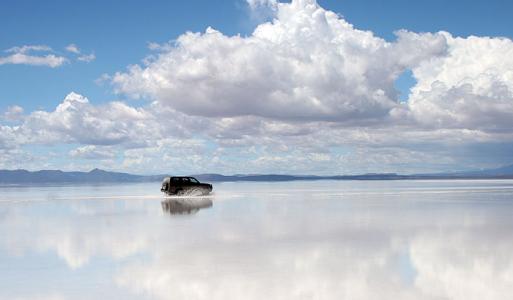
The Salar de Uyuni - now in the middle of somewhere!


The desert of Salvador DaliThe desert of Salvador Dali

Towards the south-western tip of Bolivia, high in the Andes bordering Chile and Argentina, is some of South America's most captivating scenery, an otherworldly showcase of lunar landscapes, petrified forests, geysers and multicloured lakes all under huge aqua-blue skies. However, amongst the geological marvels, the highlight is the Salar de Uyuni, the largest salt-lake in the world and a dazzlingly white expanse of hexagonal salt crystals stretching out as far as the eye can see.

For years, this was purely backpacker territory, a long slog south from the capital la Paz on rickety buses but now a brand new flight from la Paz to Uyuni has finally opened Bolivia's southern highlands.


The Salar de UyuniThe Salar de Uyuni

Last Frontiers can offer a 7 day trip to Bolivia starting from £2244 per person. Spend 2 nights in the capital La Paz with a city tour before you fly to Uyuni to embark on a unique 4 day jeep journey to take in the geysers, smoking volcanoes, petrified forests and colourful lakes of the southern altiplano culminating in the Salar de Uyuni. Each night is spent in a rustic lodge before you fly back to La Paz for a final night. The price includes international and internal flights, all transfers and accommodation and the 4 day guided jeep tour with all meals included.

To extend the trip, why not continue across the border into the Atacama Desert in Chile, see here, or even continue south though the mutlicoloured canyons of Tupiza into northern Argentina and Salta. Please contact us for more information.

Author: Ed Miles | Posted: 22 Sep 2011 | Add comments | Categories: Press releases


Mexico highlights - Sue exploring Oaxaca, Chiapas and the Yucatan Peninsula

An overdue return trip to Mexico made me appreciate what a huge, diverse and wonderful country it is: friendly people, excellent food, amazing ruins and stunning beaches.

Oaxaca

After a day in Mexico City and overnight in the lovely boutique hotel Las Alcobas we set off for Oaxaca. I loved it, cobbled streets lined with colonial buildings, a beautiful main plaza, many churches and some excellent restaurants. The Casa Oaxaca is one of our favourites but a new find was the charming Casa Catrina. Our stay was non-stop but my highlights were the archeological site of Monte Alban, where the royalty and elite of the Zapotec (and later the Mixtec) people built their homes and temples, and visiting local families in the nearby valleys where we saw famous artisans at work - wood carving, pottery and candle making - all made to look so easy! We were also treated to lunch with a local family – my favourite was the chicken and squash-blossom quesadillas with the Fuertes family, accompanied by shots of Mezcal (the local alcohol)! The weekly market in the Tlacolula Valley was amazing - very much of a local market with 1000’s of stalls selling everything - fruit, vegetables, clothing, livestock, electrical goods, etc.

Sumidero Canyon and San Cristobal de las Casas

San Juan ChamulaSan Juan Chamula

The next day was full of adventure – it started with a great scenic flight from Oaxaca to Tuxtla Gutierrez, Chiapas, on a 13 seat Cessna Grand Caravan and was followed by a boat trip through the Sumidero canyon - the limestone walls are over 1,000m high, we saw white herons, pelicans, monkeys and crocodiles and during the wet season I’m sure the Christmas tree waterfall would be spectacular.  San Cristobal reminded me of Antigua in Guatemala and, at 2,200m, was lovely and cool in comparison to the heat experienced in Oaxaca. Cobbled streets, colonial architecture, churches, local markets and lots of shopping, bars and restaurants make it a popular stopping off point for many travellers and I can understand why. Casa Felipe Flores is a gem but if you want to be outside of the city in an old hacienda I would recommend Parador San Juan de Dios. A visit to the Church in San Juan Chumula is a must for anyone visiting San Cristobal – a unique and very moving experience and I am amazed that visitors are able to visit.

Palenque, Bonampak and Yaxchilán

YaxchilánYaxchilán

I don’t think I have ever experienced quite as many speed bumps as there were on the twisty road to Palenque but it was a lovely journey passing through small villages, pine forests and farmland. En-route we stopped at the archeological site Tonina - we were the only people there which made them particularly special, they more than lived up to my expectations and were definitely worth the short detour. There are 7 platforms, it is 71m from the main plaza to the top up tiny steep steps but worth it for the view. Quinta Chanabnal was a great new find for us in Palenque and the ruins, set in jungle, are very impressive. However, the long (13 hour roundtrip), excursion to Bonampak and Yaxchilán were a highlight, even though it was over 40 degrees! Bonampak (means painted walls) is famous for its frescoes in the Templo de las Pinturas and there are some wonderful stelae. Yaxchilán on the Usumacinta River, and bordering Guatemala, is only accessible by boat - we felt like real explorers, there was no-one else around, The Temple of the Murals was amazing and the view from the top of the main temple worth the climb.

Haciendas and the Yucatan Pensinsula

Beach at EsenciaBeach at Esencia

Leaving Chiapas it was on to the Yucatan Peninsula for some hacienda hopping before finally arriving to the Riviera Maya for some time on the beach. This section of the trip makes an excellent holiday in its own right if time is more limited. Mérida is an interesting city, there are some wonderful haciendas in the region, and many fascinating archeological sites including Uxmal and famous Chichen Itzá. A couple of my favourite haciendas were Hacienda Uayamon and Hacienda Santa Rosa both with lots of history, beautiful grounds and excellent food.

The Riviera Maya now has many hotels but it’s a beautiful coastline with wonderful beaches. I was lucky enough to have a night in both Maroma and Esencia, which both continue to be favourites but the Ana y Jose and be Tulum, in Tulum, are both excellent alternatives for those on more of a budget and wanting to be less isolated. Other great finds, particularly if you are looking for somewhere to spend time with a group of friends, were the private villas I visited, either Villa Xpu-Ha or, for somewhere more remote, Casa Nulum.


Overall an excellent trip with plenty more still to explore. Mexico has something for everyone - definitely recommended.

Author: Sue Morkill | Posted: 31 Aug 2011 | Add comments | Categories: Trip reports


Page links

Click a category or country to filter your results

Categories

Countries